Cart
0
You may also like


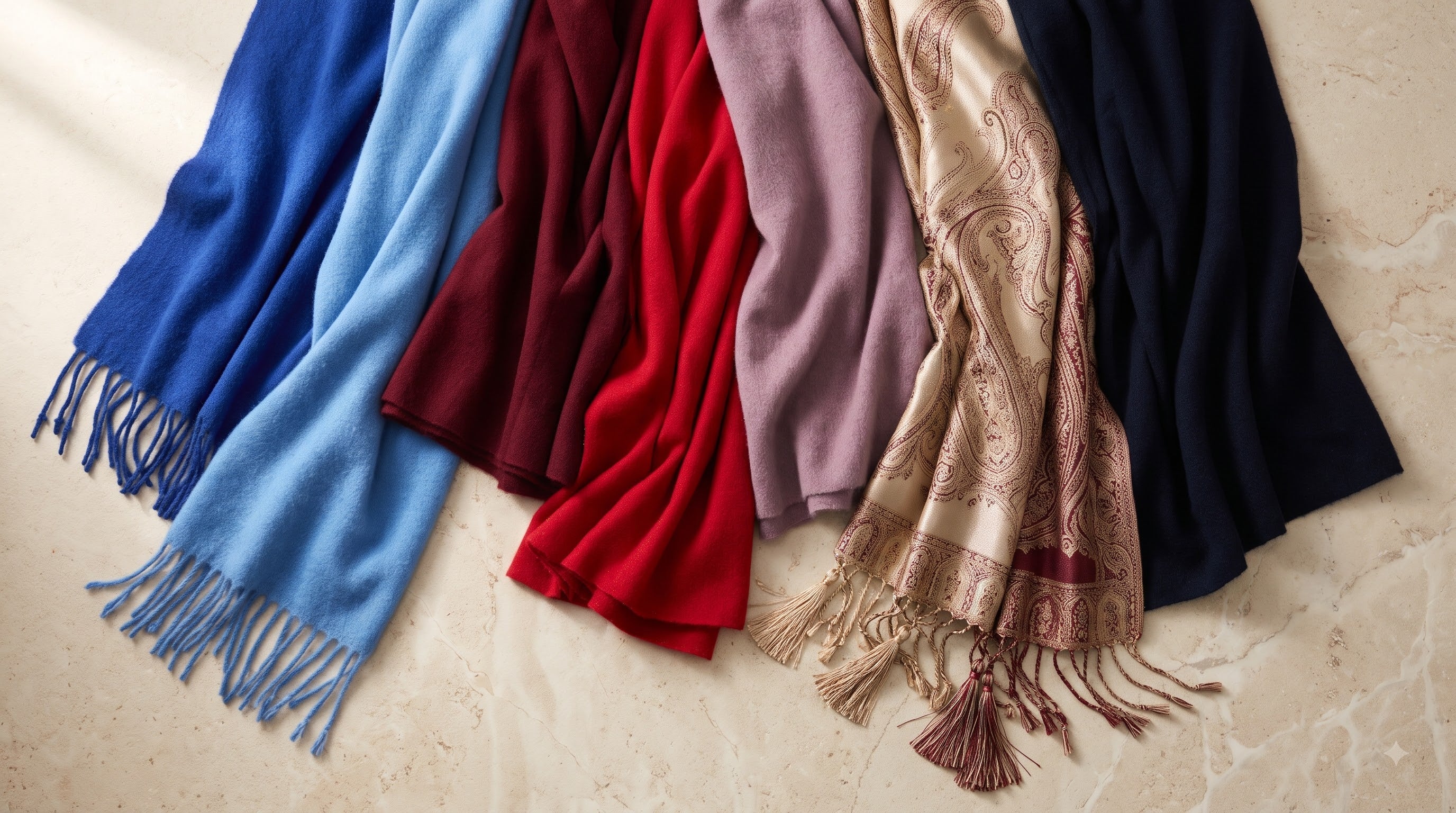
Have you ever picked up a shawl, felt how soft it was, and wondered what it was made of? You are not alone. The words cashmere, pashmina and silk get mixed up all the time.
Some shops even use them for shawls that are mostly plastic fibres.
Let's make it simple: where each fibre comes from, how it feels, and which home checks really help.
Cashmere comes from goats. Not from their long, rough outer hair, but from the soft, fluffy layer underneath. This is called the undercoat. It grows in winter to keep the goat warm.
When spring comes, the goats lose this undercoat. It is gently combed out, cleaned and spun into yarn.
The word "cashmere" comes from an old way of spelling Kashmir, where these shawls first became famous.
To be called cashmere, the fibre must be very fine. Under the rules used in many countries, the average cashmere fibre can be no thicker than 19 microns. A micron is one thousandth of a millimetre. That is far too small to see with your eyes.
Here is a surprise: pashmina is a type of cashmere. It is the finest type.
It comes from a special goat called the Changthangi goat. These goats live on high, windy plains in Ladakh, in the Himalayas, often more than 4,000 metres above the sea. In winter, it can get as cold as minus 40 degrees.
To stay alive in that cold, the goats grow an extra fine undercoat. Pashmina fibres are usually only about 11 to 14 microns thick. A human hair is around five or six times thicker!
"Pashm" is the Persian word for wool. Because this fibre is rare and precious, it is often called the "soft gold" of the Himalayas.
Each goat gives only a few hundred grams of this fibre a year. That is one big reason why real pashmina costs more. You can read more about these fibres on our fabrics page.
Silk comes from a small caterpillar called the silkworm. Before it turns into a moth, it wraps itself in a cocoon made from one very long thread. Just one cocoon thread can be hundreds of metres long.
Silk is smooth, light and shiny. It feels cool on the skin.
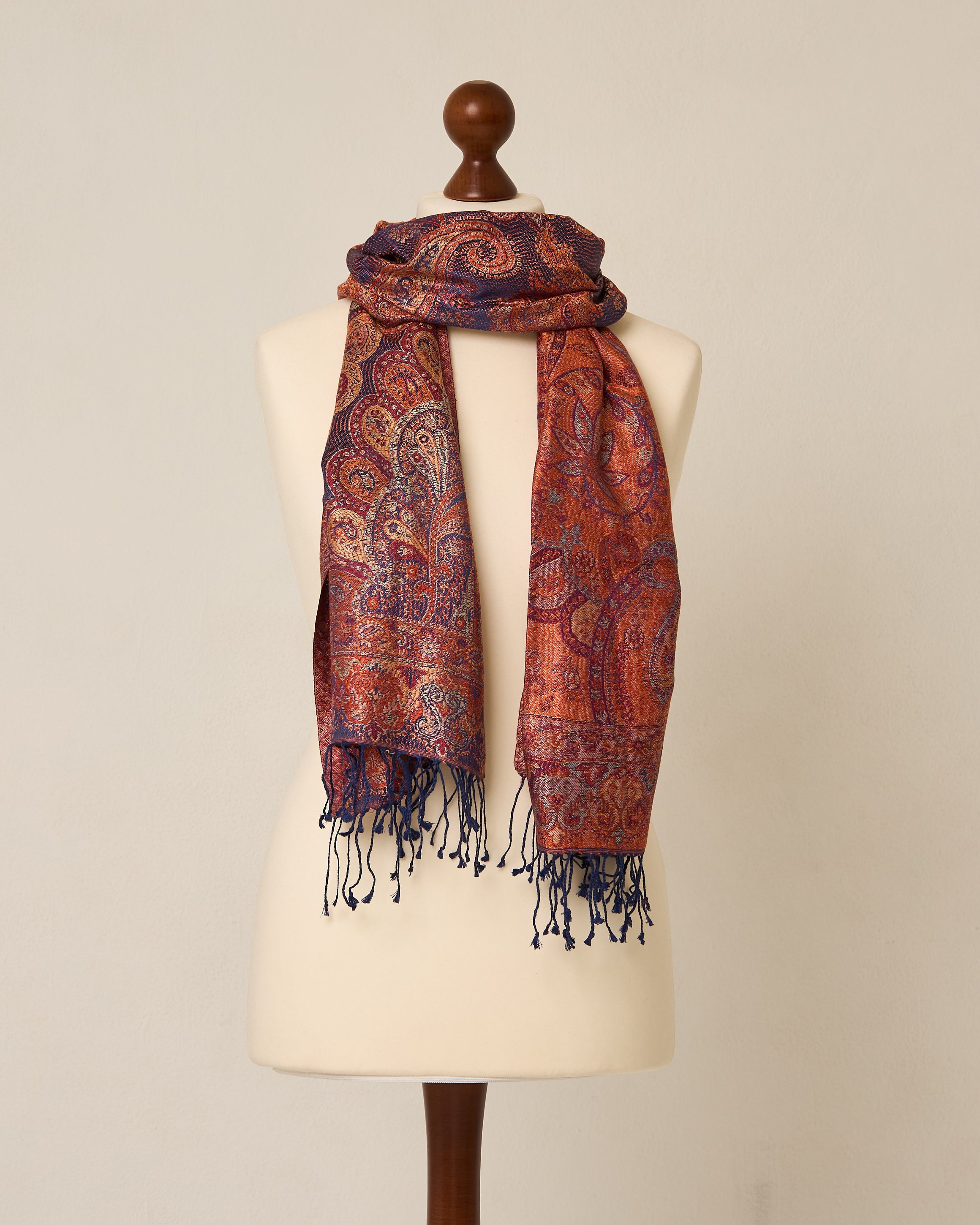
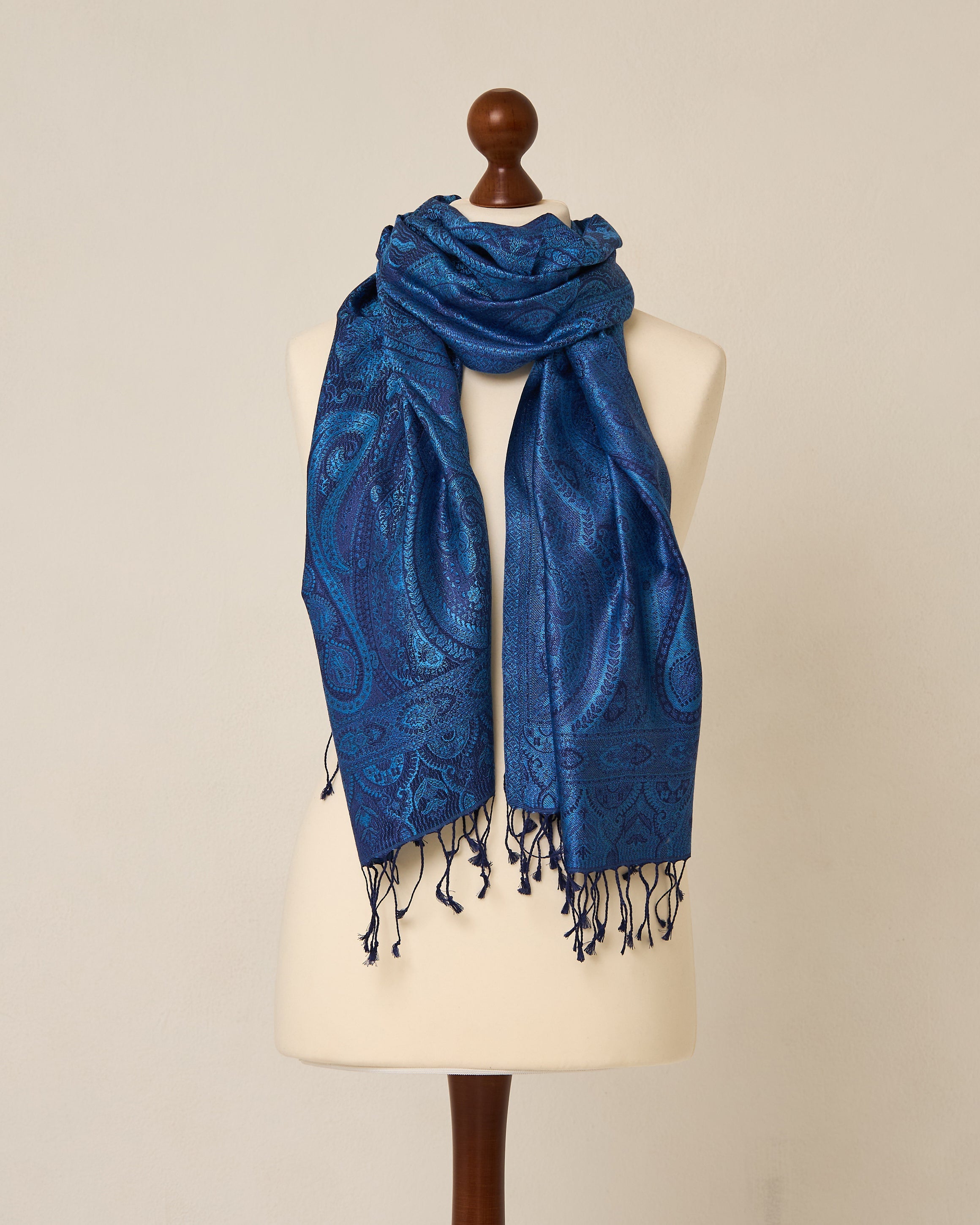
Many of our silk jacquard shawls are made with jacquard weaving. This means the pattern is woven right into the fabric, thread by thread, instead of being printed on top. The jacquard loom was invented in France more than 200 years ago, and it is still used today for detailed designs like our paisley shawls.
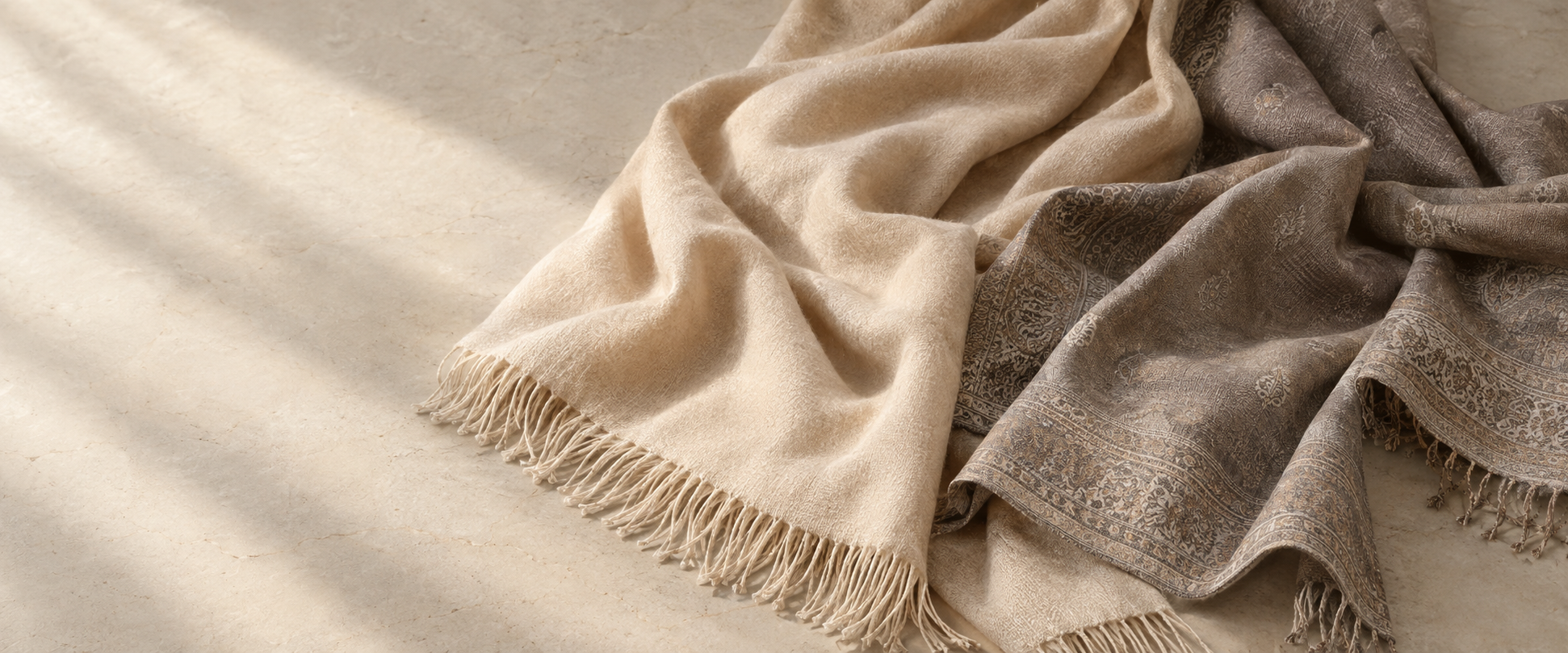
Soft, warm and a little fuzzy, like a cosy blanket. Perfect for a Swiss winter.
Even finer and lighter. It feels almost like air, yet keeps you warm.
Smooth, cool and shiny. It is more about colour and shine than deep winter warmth.
You may have seen videos where someone pulls a big shawl through a small ring. The idea is that only real pashmina is thin enough to slide through.
Sadly, it proves nothing. Many thin shawls made from viscose or other man-made fibres pass through a ring easily. And some real, hand-woven pashmina is a bit thicker, so it will not fit.
It only shows that a fabric is thin, not what it is made of.
Real cashmere and pashmina take time and care to make. If a large shawl called "100% pure pashmina" costs the same as a lunch, it is fair to ask questions.
Words like "pashmina style", "cashmere feel" or "cashmere touch" usually do not mean real cashmere. Look for the exact fibre and the percentage, such as "100% cashmere" or "100% silk".
Never burn the shawl itself. Take one loose thread from a hidden edge. Hold it with tweezers over a sink or a metal dish, near an open window.
Natural animal fibres, like cashmere, pashmina and silk, curl away from the flame and smell like burning hair. They leave a soft, black ash that crumbles when you rub it.
Plastic fibres, like polyester and acrylic, melt and drip. They smell like chemicals and leave a hard little bead.
But remember, this test only tells you if a fibre is natural or plastic. It cannot tell pashmina apart from ordinary sheep's wool.
The only sure way is a laboratory test, where experts measure the fibres under a microscope. For a very expensive piece, ask the seller if it has been tested.
At Venura Swiss, we believe you should know what you are buying. Cashmere and pashmina are different, and not every shawl is fully handmade. So we describe each piece by its real material.
Our Pure Cashmere shawls are made of cashmere, and our jacquard shawls are woven from silk. If you would like to know more about where we come from, you can read our story or learn about the art of Kashmiri shawl weaving.
Pashmina is a type of cashmere. It is the finest kind, and it comes from Changthangi goats that live high in the Himalayas.
Cashmere and pashmina are much warmer than silk. For a cold winter morning, choose cashmere. For a mild evening, silk is a lovely choice.
No. Thin man-made shawls can pass it, and some real pashmina cannot.
Each goat gives only a small amount of soft undercoat each year. Cleaning, spinning and weaving it also takes skill and time.
Yes! There are no clothing sizes to worry about. A silk shawl is light and easy to wrap, and a cashmere shawl is a warm gift for winter.
Now for the fun part: choosing! Browse our soft Pure Cashmere collection for the cold months, or pick a bright silk jacquard shawl for special days.
Not sure which one to pick? Send us a message and tell us what you need. We will gladly help you find the right shawl.